
Improving energy efficiency in a Grade 1 listed building
The assumption is that you can’t do much to improve energy efficiency in a Grade 1 listed building. That’s not true. You can—provided you carefully preserve the building’s heritage.
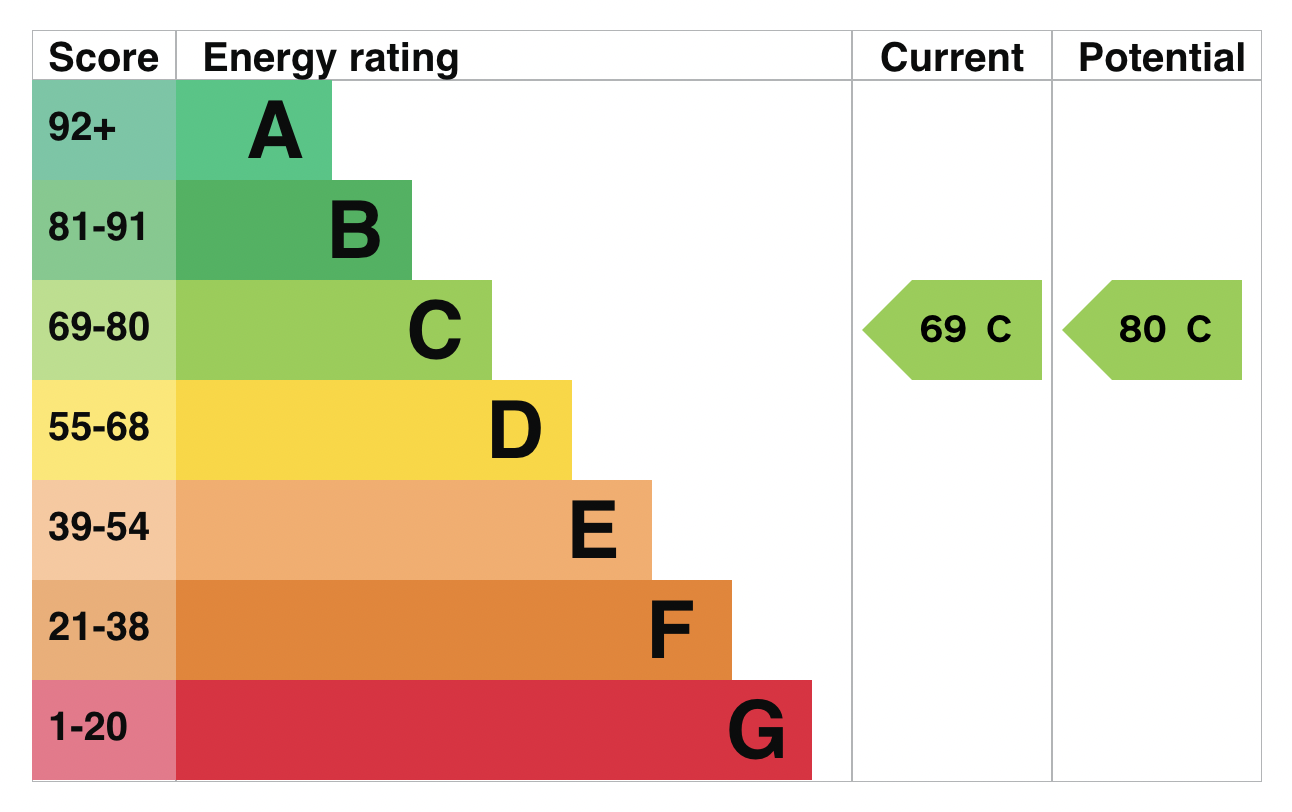
When I purchased my apartment on Great Pulteney Street in Bath, the energy rating was a low E. With nine large sash windows and very little modernisation since the townhouse was converted into flats in the 1980s, the apartment was extremely inefficient. I successfully enhanced the energy rating which Historic England’s own guidance suggests is rarely achievable in a Grade 1 property.
From the outset, my aim was to restore the original piano nobile and reinstate the apartment as a grand floor for living and entertaining. I understand the responsibility of looking after a property like this, I wanted the Georgian architecture to speak for itself, but also need the property to function for modern living.
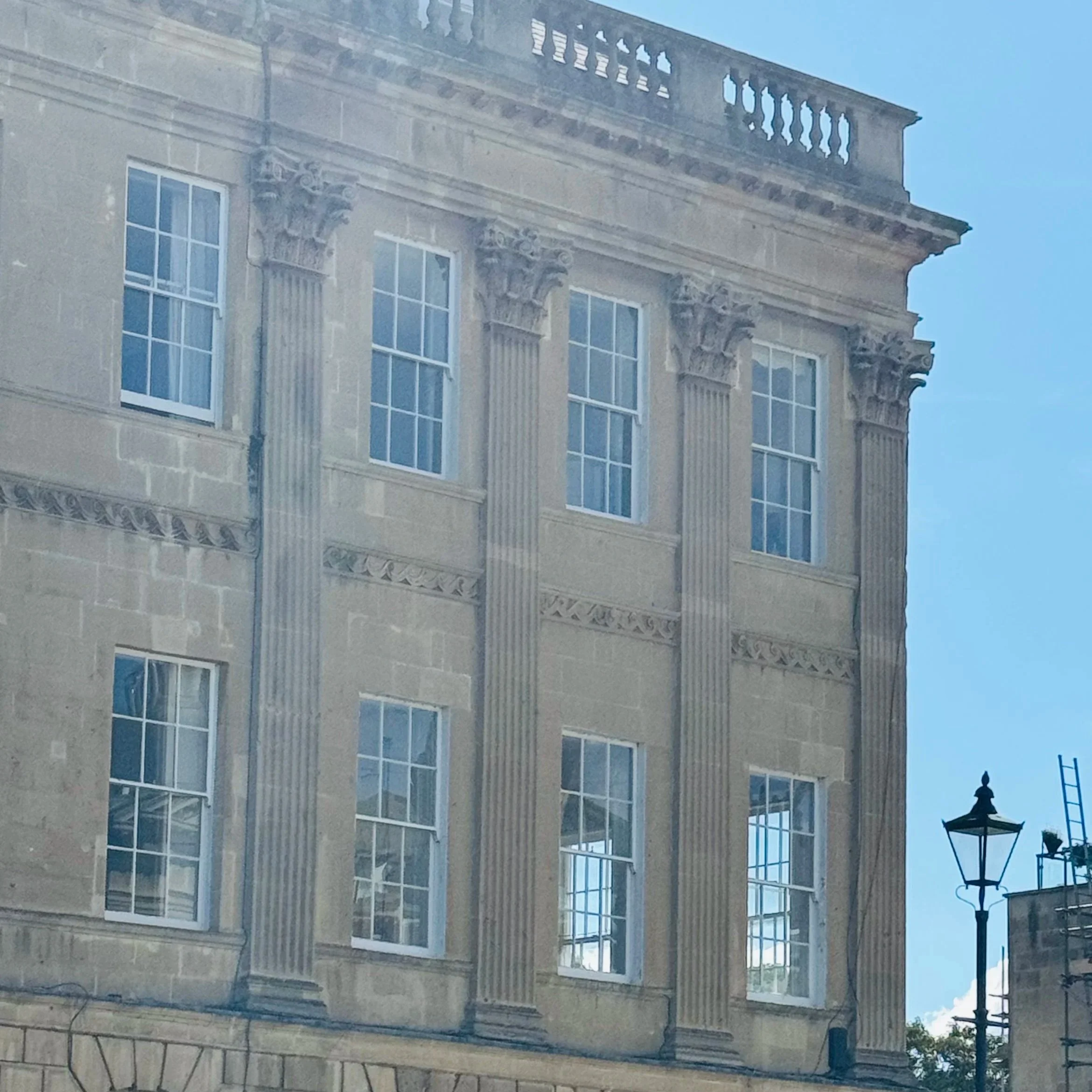
Great Pulteney Street is one of Bath’s most prestigious addresses, designed by Thomas Baldwin, built in the late 1700’s. Its principal elevation is defined by rigorous architectural uniformity and symmetry: a continuous terrace of finely detailed façades in Bath stone, with consistent proportions, repeated window rhythms, and restrained classical design. It’s not possible (and of course I would not want) to alter the windows in one apartment without irreversibly damaging the entire street.
Any changes require Listed Building Consent, and fire regulations have evolved significantly since Grenfell. I also only own one floor, so there are limits to what sits within my control.
A significant portion of my budget went into restoring the windows. Many were rattling—the timber had warped, sections had rotted, and much of the putty (or more likely filler that had been added over time) had disintegrated. The side elevation, which takes the brunt of the weather, had deteriorated the most and were no longer safe.
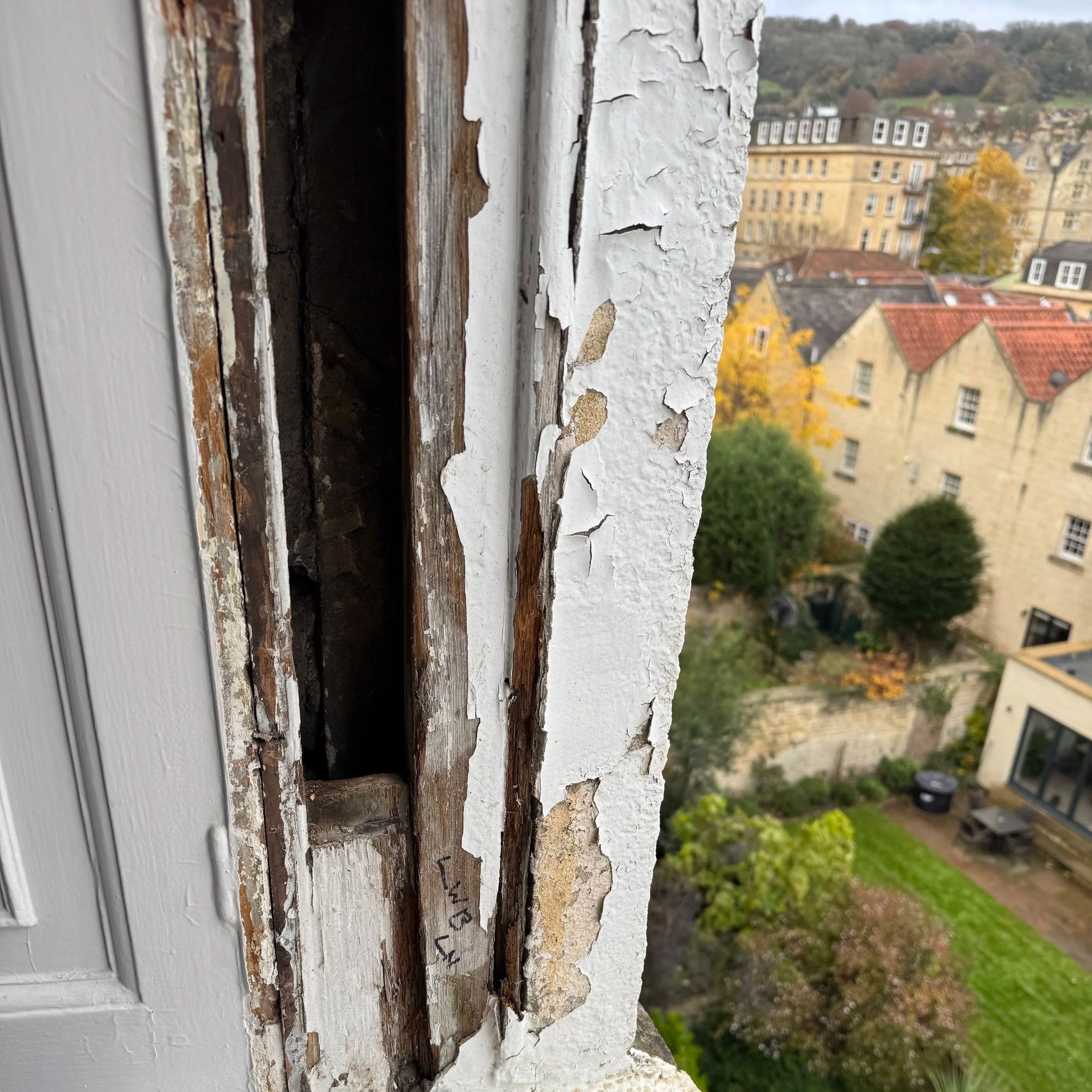
At the rear of the building, the sash windows were Victorian rather than original Georgian. They had likely already been adapted to take advantage of the views towards the grand columns of Prior Park mansion and the wider Bath landscape. I worked closely with local restoration specialists, architects at Mark Wray, and the planning authority to understand what would be possible, how much I could restore and what needed to be replaced, before submitting an application.
We were granted permission to install new high-tech Fineo vacuum glazing at the rear of the building. It’s a clever solution—visually indistinguishable from single glazing, but with superior performance. The technology uses two ultra-thin vacuum-insulated glass panes with a 0.2mm vacuum gap between them to eliminate convection and conduction. The glass was then inserted into new frames crafted by Newmans of Bath exactly replicating the original profiles. The result is brand new windows that look exactly the same as the windows in the front of the property but with vastly improved energy efficiency.
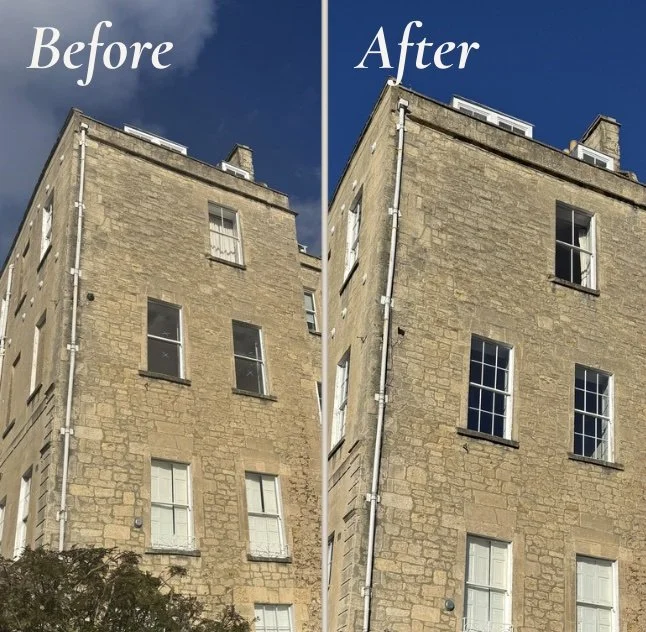
For the remaining seven sash windows, we replaced what was beyond repair and restored the rest. While the panes remain single glazed, all frames, casements, cords and weights are now restored and airtight.
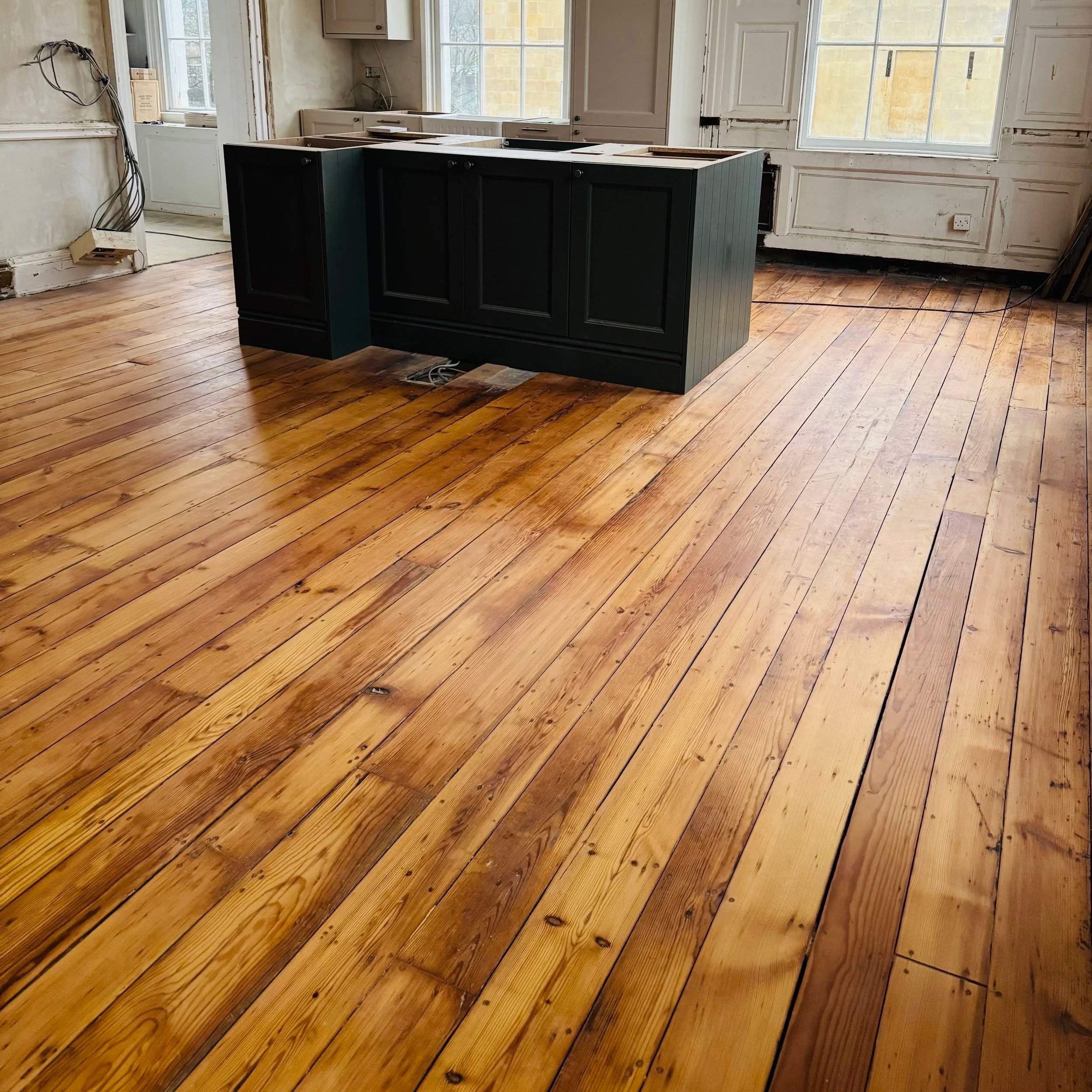
Alongside the windows, a substantial investment went into insulating the floor. The original boards were carefully lifted, numbered, and reinstated in the same layout. Between the joists, we introduced fire protection and acoustic insulation before relaying, sanding, and oiling the boards. It improves thermal performance, reduces draughts, and significantly enhances sound insulation.
This part of the renovation added significant time to the overall project since it had to be done carefully and slowly. It required a lot of patience and skill to balance on the joists for weeks on end doing painstaking work, my contractors Besley & Co were brilliant at giving this the time and care the building deserves.
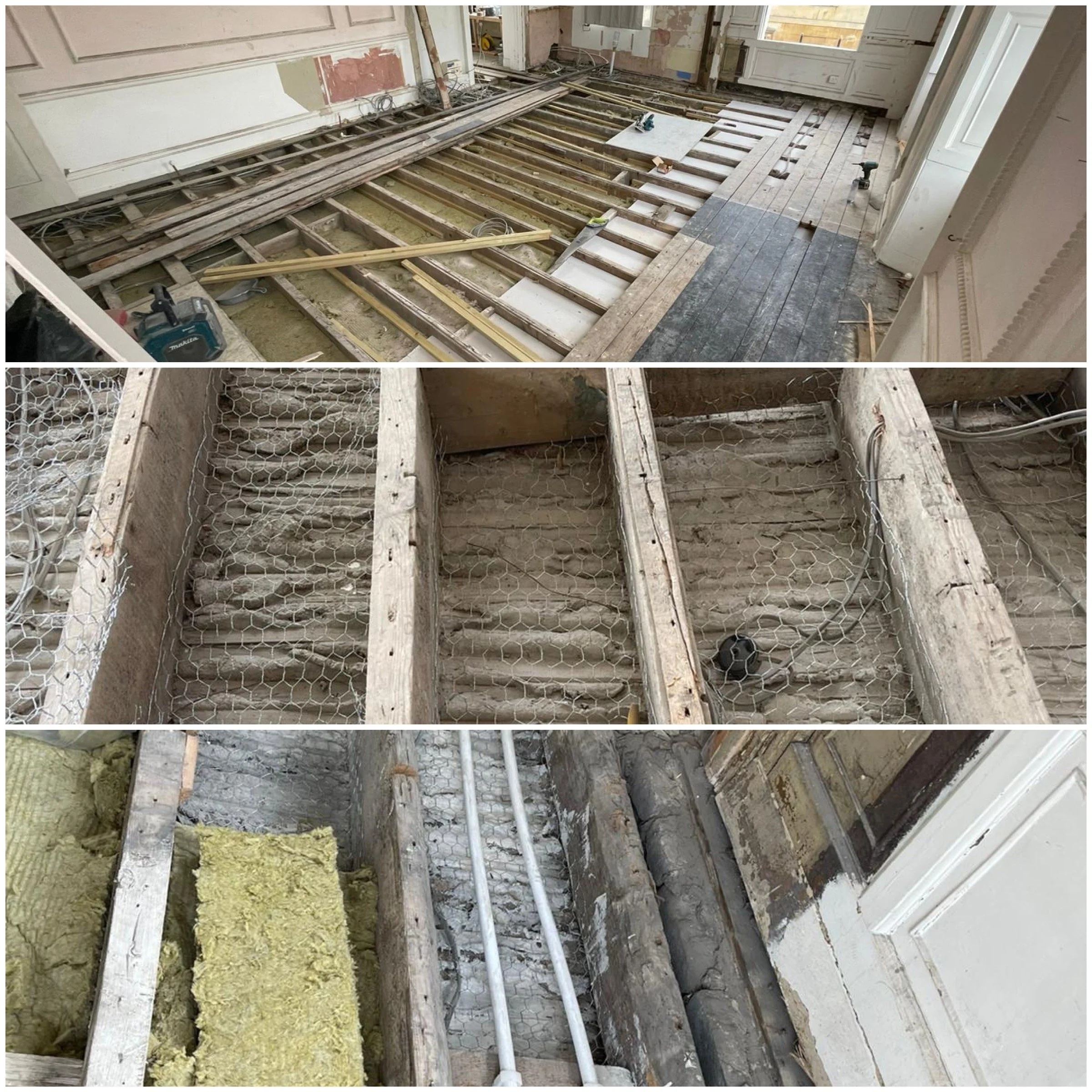
I’m so happy with the finished floor - it looks beautiful and I know the improvements you can’t see enhance the energy and sound efficiency of the entire building, as well as upgrading the fire safety.
Finally, I also installed a new boiler, new appliances - all category A on energy efficiency, LED lighting throughout and a Quooker hot water tap which heats boiling water more efficiently than a kettle. New cast iron radiators that release heat slowly ensure heating is as efficient as possible.
The combination of new windows, radiators and floor in this piano nobile make a truly stunning frame and backdrop for the interior choices that followed. I will write more about the interior restoration in a separate article!
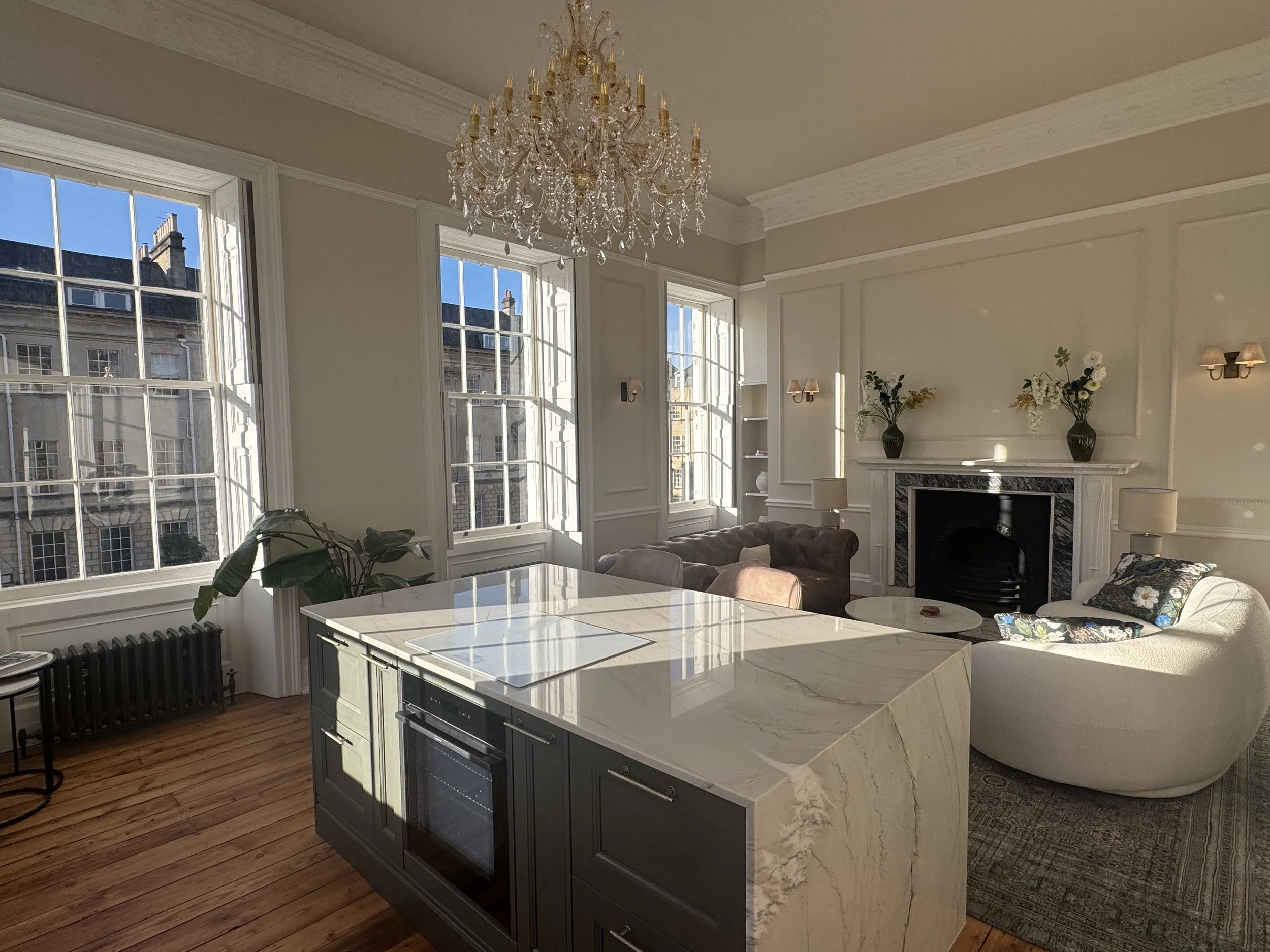
I’m proud of the result. The energy rating has improved from an E to a C—which is a meaningful shift, and unusual for a Grade I listed property.
It definitely feels as though we have enhanced the building and made significant headway into future proofing. If there’s one lesson from this project, it’s that a Grade 1 listed building demands patience above all else. I had a lot of advice going into this and wasn’t expecting anything to be fast, but you never know where the delays are going to happen. I would advise anyone attempting something similar to savour it all, put your love and time into your research, planning and expect delays - especially in getting specific materials that meet the heritage requirements. Most of the products you will need are not available off the shelf!