
Why Queen Charlotte of Bath? The story behind QC of Bath.
Just like choosing a name for your children or your pet, choosing a name for your company is not easy. I wanted mine to be memorable, something that strikes a chord with my home, Bath - its history, heritage and architecture, and has some relevance to me and my passion for property restoration.
Bath is famous for its grand Georgian architecture, based on the classical style of Andrea Palladio (1508-1580). The overriding principles of symmetry and proportion, classical orders, the piano nobile and unified façades can be found across the city, largely built by John Wood the Elder (1704-1754) and the Younger (1728-1782). Palladio’s The Four Books of Architecture documents his interpretations of architecture in ancient Rome, are the basis of classical architecture across Europe and the US, and are one of my favourite reference books to get stuck into.
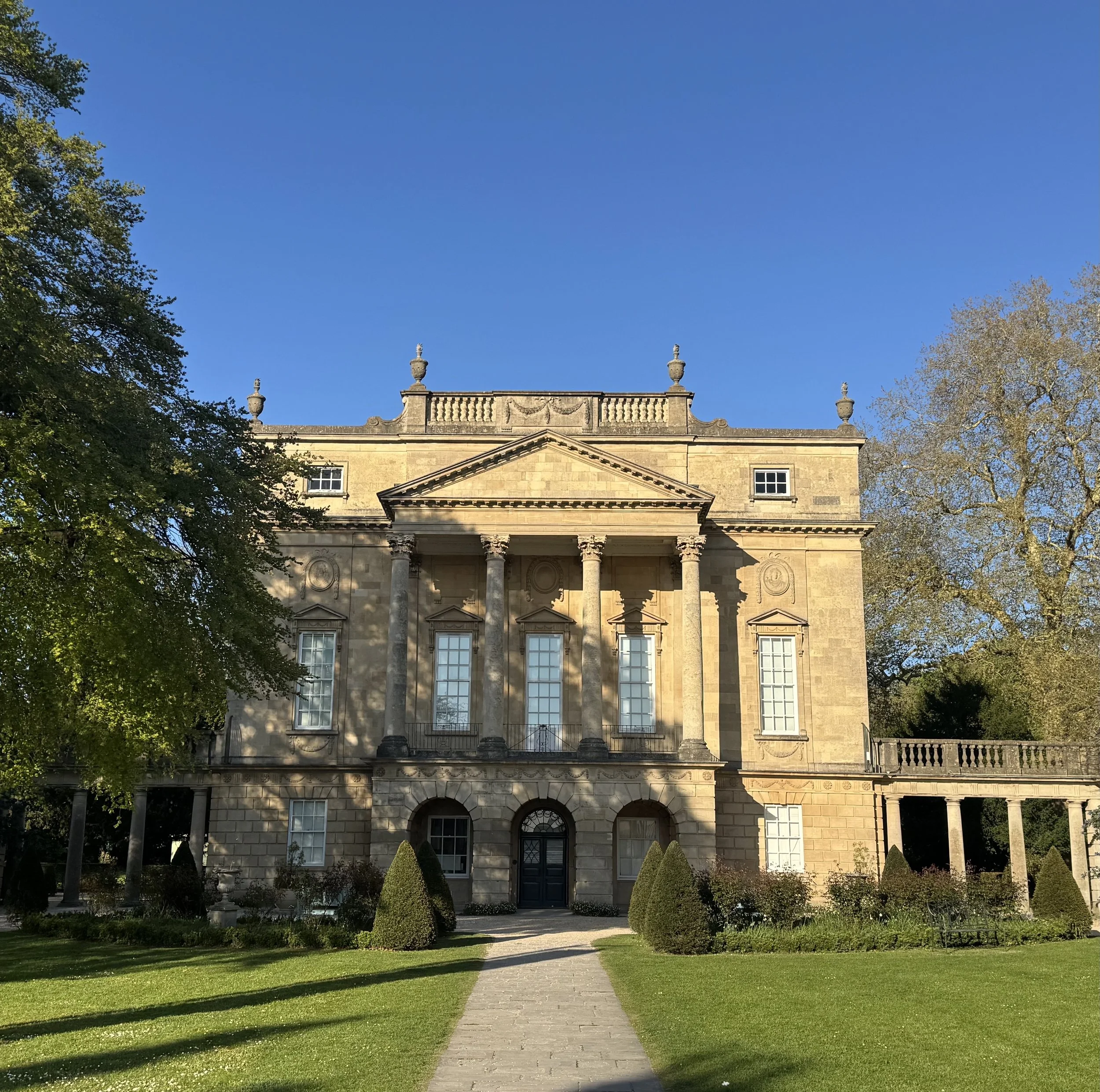
The Holburne Museum at the end of Great Pulteney Street - a perfect expression of Palladian principles. Symmetry, proportion, classical order, Corinthian columns, arches - all visible from the grand living room of my recently restored apartment.
I find Georgian property so compelling. Having grown up in Bath, I grew used to being surrounded by the honey coloured Bath stone and really missed those stonescapes when living overseas. It’s no surprise to me that natural stone in grand proportions has become something of a signature move in my properties. I get such a thrill from exploring marble and granite stone yards and seeing those giant slabs of stone. One of the most exciting parts of my latest project was uncovering natural stone in the hallway of my Georgian townhouse apartment under layers of old carpet - my giant stone creations have been well documented in my IG account, @queencharlotteofbath.
There’s something about Georgian spaces that’s hard to describe until you experience one. Walking into a piano nobile, with its high ceilings and natural light, has a very real effect—it’s calming, uplifting, and quietly impressive, even when the building itself is in a state of disrepair.
That sense of potential is a big part of what drives me. My goal is to restore Georgian property to ensure these buildings are protected for the future. I know I’m only a custodian of any property for a short period of time and consider it my duty to give as much care to them as I can. I want my properties to be enjoyed and admired by anyone who loves the design side of historic property and interiors.
Bath also has a host of well-known historic occupants, particularly women. Jane Austen set key scenes in Northanger Abbey and Persuasion in Bath and Mary Shelley wrote most of Frankenstein from here. One figure I keep coming back to, is Queen Charlotte, wife of George III, who lived in Bath briefly in 1817. Her lean towards grand spaces for entertaining privately and being family-orientated really resonates. It points to everything I love - being at home with my children and entertaining my close friends and family. That balance between refinement and comfort feels very aligned with how I approach property development.
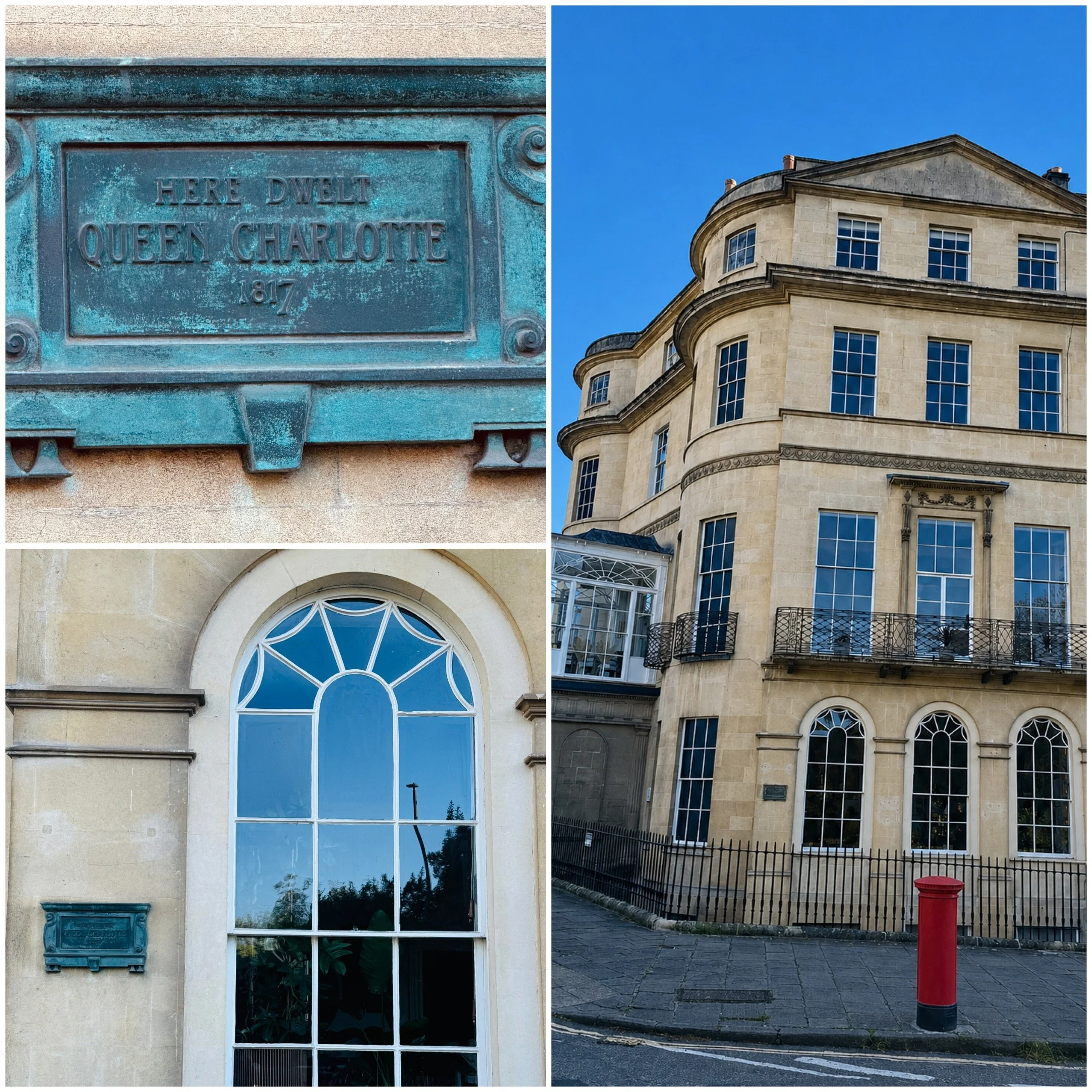
Queen Charlotte lived just around the corner from my apartment on Great Pulteney Street — on Sydney Place, where the plaque is still on the building. It's also where Jane Austen lived for three years from 1801. Some streets carry more history than others!
The other slightly more tangential element of Georgian Bath is the extent to which it’s used in period drama across film, streaming and TV. I’m a sucker for a good box set, so naturally Bridgerton has piqued my interest given its local relevance. The Queen Charlotte of Bridgerton series was a particular favourite — and it was filmed at The Holburne Museum and on the same streets where the real Queen Charlotte lived, both within a few minutes' walk of my front door.
I was slightly hesitant about referencing royalty in my company name, but there are too many coincidences here to ignore! Interestingly, when I co-founded StatsBomb back in 2016, we were told repeatedly that the name wouldn’t work. We followed our gut, ignored that advice because we knew it would be memorable—and it worked, our customers did remember the name.
So when it came to naming my company this time round, I trusted the same instinct. And that’s how QC of Bath came about—short for Queen Charlotte of Bath. A name that ties together place, history, and a particular lifestyle approach.
From here, the ambition is simple: to continue restoring and reimagining Bath’s historic properties, to ensure they are enjoyed by friends and family, and to help people relocating to Bath settle in with confidence—whether through the homes themselves, or by drawing on my network and knowledge built up along the way.
You know something is right when it feels natural—when it’s evolved organically and is completely, authentically you.
Thank you for reading,
Charlotte